
October is Breast Cancer Awareness Month — a timely moment to examine real-world data linking innovative treatments to shifting clinical practice while highlighting barriers to access.
New Therapies, New Momentum
Antibody-drug conjugates (ADCs) represent a breakthrough in precision oncology, combining the specificity of monoclonal antibodies with the cytotoxic potency of chemotherapy drugs. This innovative approach allows for precise delivery of potent anti-cancer agents directly to tumor cells (via binding to tumor antigens and subsequent endocytosis) while minimizing exposure to healthy tissues, providing a more targeted and effective therapeutic option.¹
Our latest analysis with the Tigerlily Foundation, using real-world insights from Komodo’s Healthcare Map®, reveals encouraging shifts in the clinical landscape:
- Rapid adoption: ADC treatment rates saw a 3.7-fold increase between 2021 and 2023
- Faster access: The median time to treatment dramatically decreased from 331 days to just 109 days over the same period
However, as with any major shift in the standard of care, it’s critical to investigate who is benefiting and the barriers to accessible care for all.
The Findings: Progress on Race, Pervasive Barriers on Age
Leveraging our healthcare analytics AI platform, Marmot™, we examined ADC treatment patterns for three key FDA-approved ADCs (Kadcyla®, Enhertu®, and Trodelvy®) among over 17,000 women with newly diagnosed metastatic breast cancer. Our analysis uncovered two distinct patterns.
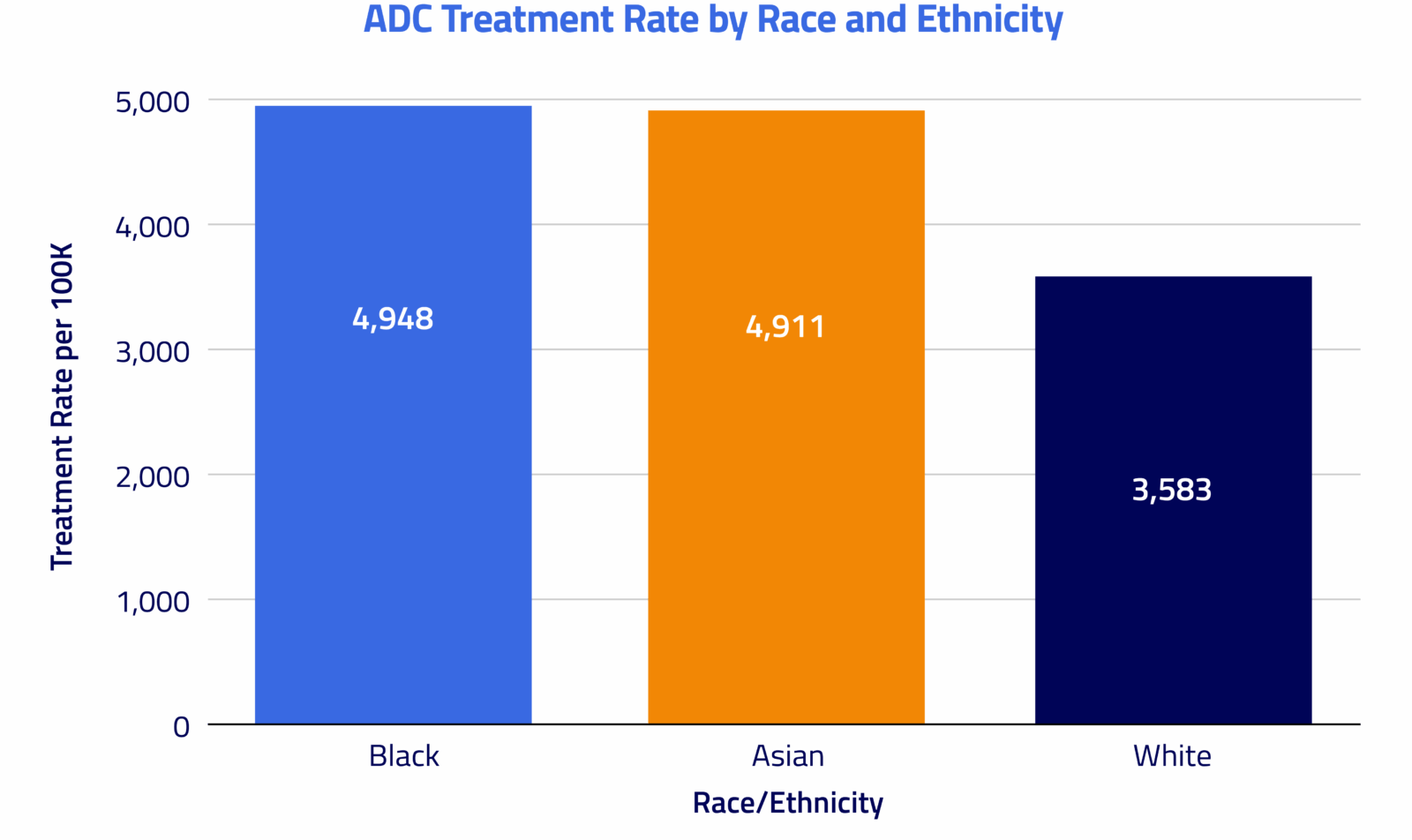
- A path to racial equity in precision medicine. We found that ADC utilization aligns with the known prevalence of cancer subtypes across racial groups. Black women, who have a higher rate of triple-negative breast cancer, showed the highest treatment rate, primarily driven by the use of Trodelvy. This finding underscores that when precision treatments are specifically targeted to disease biology, racial disparities are not inevitable.

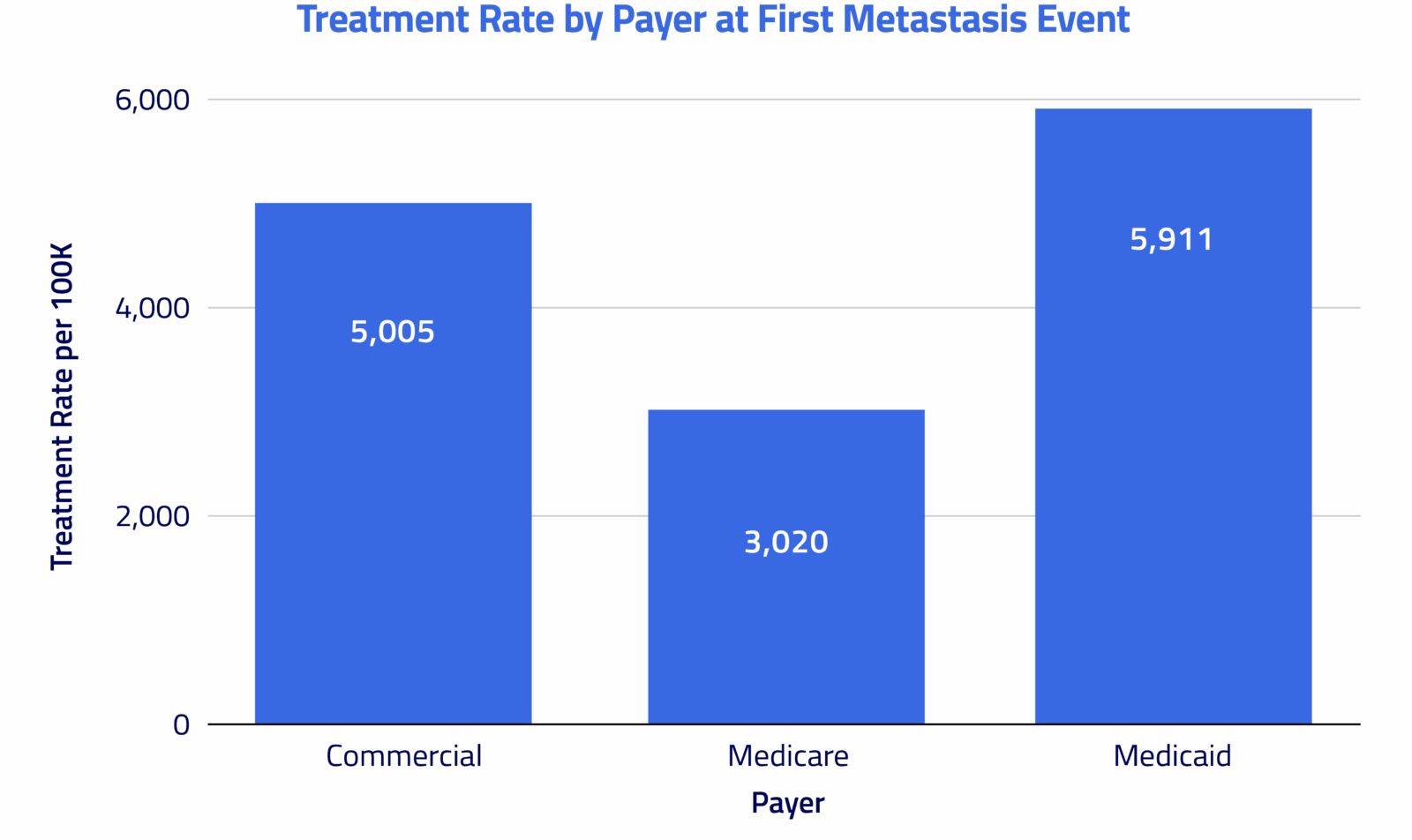
- Urgent age and insurance barriers: The most significant disparity uncovered by the analysis is a systemic gap in care for older patients. Women ages 66 and older received ADC treatment at rates 3.4 times lower than the youngest patients (age 19-35). They also faced the longest delays in treatment initiation. This critical gap — primarily affecting patients covered by Medicare — should be investigated to discern whether it is rooted in clinical appropriateness or in systemic barriers related to age, access, and insurance policy.
Turning Insights Into Action
The insights from this analysis are a mandate for action. By delivering preeminent, real-world healthcare analytics to address urgent public health challenges, Komdo Health is committed to empowering the healthcare ecosystem with actionable insights that uncover both progress and disparities to improve patient outcomes and reduce the global burden of disease.
Download the full research brief to learn more and take action.
To see more articles like this, follow Komodo Health on LinkedIn, YouTube, or X, and visit our Resources Hub.
¹ He J, Zeng X, Wang C, Wang E, Li Y. Antibody-drug conjugates in cancer therapy: mechanisms and clinical studies. MedComm. 2024;5(8):e671 https://doi.org/10.1002/mco2.671